Published on 03/12/2025 by James Best
Doctor Detective: How Elizabeth Blackwell Changed Medicine Forever!
Let’s Discover Something Amazing!
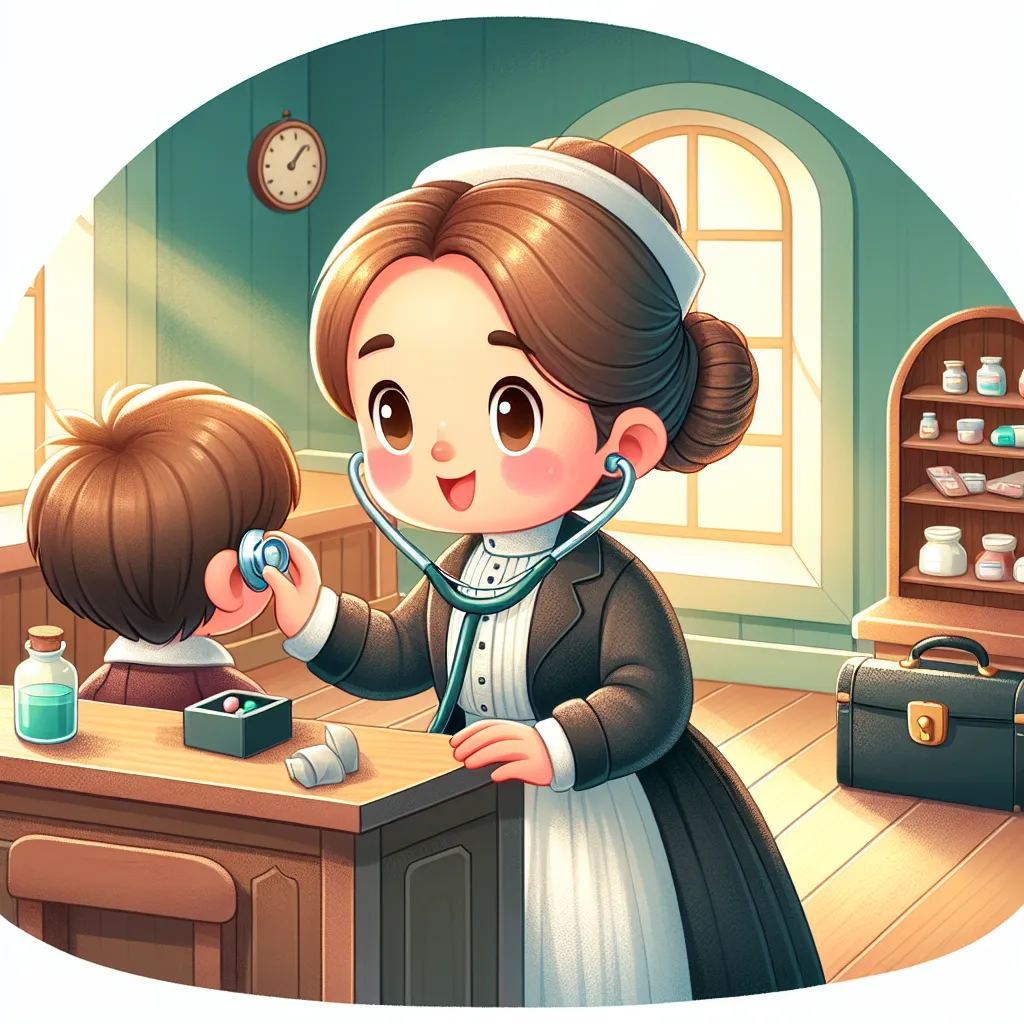
Have you ever been to see a doctor when you were poorly? Maybe they used a stethoscope to listen to your heart or looked in your ears with a special torch? Doctors help us get better when we’re ill, but did you know that for hundreds of years, only men were allowed to be doctors? 🩺
Imagine being told you can’t do your favourite thing just because you’re a girl or a boy! That’s exactly what happened to Elizabeth Blackwell. When she said she wanted to be a doctor, people laughed at her! But Elizabeth didn’t give up. She became the very first woman in the whole world to get a medical degree and become a proper doctor. How brilliant is that?
The Big Idea: Breaking Barriers in Medicine
Elizabeth Blackwell wasn’t always interested in becoming a doctor. Born in Bristol in 1821, she grew up in a family that believed girls should be educated just like boys—quite unusual for that time! When Elizabeth was 11 years old, her family moved to America. As she grew older, a dying friend suggested she should become a doctor, saying female patients would feel more comfortable with a woman doctor.
Elizabeth thought this was a splendid idea! But when she applied to medical schools, she was rejected by 29 different schools before finally being accepted at Geneva Medical College in New York. The story goes that the school asked all the male students to vote on whether to let her in—they thought it was a joke and voted yes!
Here are some fascinating facts about Elizabeth’s journey:
- Elizabeth graduated top of her class in 1849, becoming the first woman to receive a medical degree in the United States.
- She had to sit separately from the male students during lectures.
- Elizabeth travelled to Paris and London to continue her medical studies but was only allowed to study as a midwife, not a full doctor.
- She later founded the New York Infirmary for Women and Children, a hospital run by women doctors to help poor women and children.
- Elizabeth also started the first medical school for women in the United States.
Did You Know? When Elizabeth was training in Paris, she lost sight in one eye after catching an infection from a baby she was treating. Even with this disability, she continued her medical career!
Science Spotlight: The Lasting Impact of Elizabeth Blackwell
Elizabeth Blackwell didn’t just change things for herself—she changed medicine forever! Today, nearly half of all doctors in the UK are women. During the recent COVID-19 pandemic, female doctors, nurses, and scientists were essential in treating patients and developing vaccines. Elizabeth’s determination to provide healthcare specifically for women and children led to better understanding of women’s health issues that continues today.
What’s particularly surprising about Elizabeth’s career is that she initially disliked the idea of medicine and found the human body “disgusting”! Yet she overcame this aversion because she believed so strongly in helping others. This shows that sometimes our greatest strengths come from facing our biggest challenges!
Time to Get Our Hands Dirty!
Make Your Own Stethoscope!
Let’s create a simple stethoscope like doctors use to listen to heartbeats and breathing!
Materials you’ll need:
- A funnel (plastic or paper)
- 30-50 cm of flexible tubing (like aquarium tubing)
- Tape
- Scissors
- Adult supervision for cutting
Safety warning: Be careful with scissors and never put the stethoscope too far into your ears.
Steps:
- Ask an adult to help you cut the tubing to length (about 30-50 cm).
- Insert one end of the tubing into the narrow part of the funnel.
- Secure it with tape so it doesn’t slip out.
- The funnel end goes against the chest, and the other end goes near (but not inside) your ear.
Try it out! Place the funnel against someone’s chest (with their permission, of course!) and listen carefully through the tube. Can you hear their heartbeat? Try listening after they’ve been sitting still, then after they’ve jumped up and down for 30 seconds. What’s different?
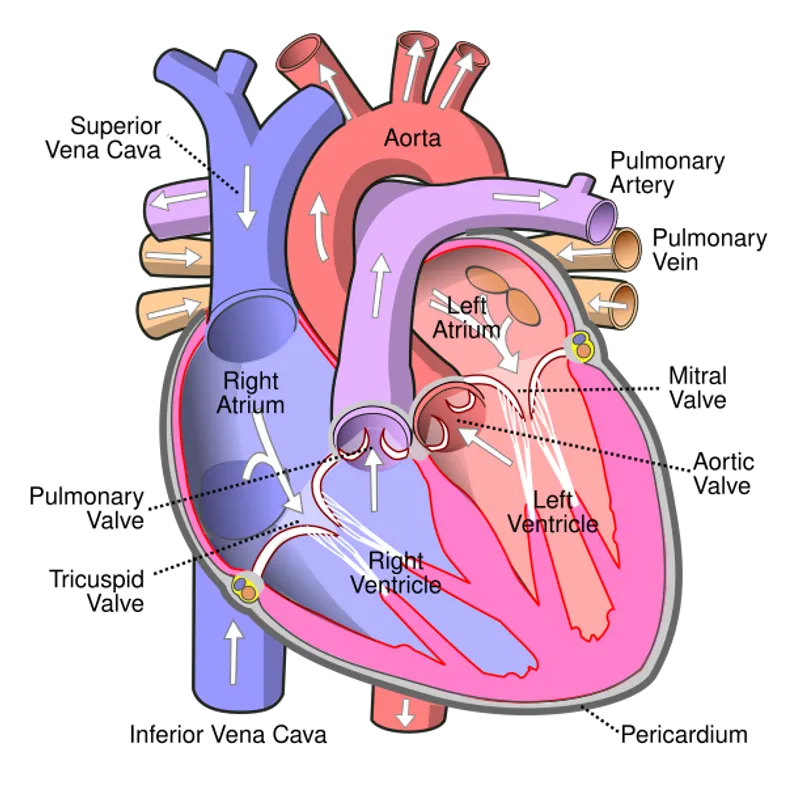
The Science Behind It: Your homemade stethoscope works by amplifying sound waves. When the heart beats, it creates vibrations that travel through the body tissues. The funnel collects these vibrations and channels them through the tube directly to your ear, making them easier to hear. Real doctors’ stethoscopes work on the same principle but are designed to hear specific sounds more clearly.
Mind-Blowing Facts!
- Elizabeth lived to be 89 years old and wrote many books about medicine and health.
- By the time Elizabeth died in 1910, there were over 7,000 female doctors in America. That’s enough doctors to fill about 35 primary schools!
- Elizabeth had a younger sister named Emily who also became a doctor. They often worked together.
- In the 1800s, most people only lived to be about 40-50 years old. Today, thanks to better medicine and doctors like Elizabeth, people in the UK typically live to be about 80!
Wow Statistic: When Elizabeth Blackwell started studying medicine, less than 0.1% of doctors were women. Today, about 48% of doctors in the UK are women. That’s nearly half!
Your Turn to Explore!
Explorer’s Challenge: Become a Medical Detective
Elizabeth Blackwell had to learn about how the body works. Let’s explore some body science with these activities:
-
Pulse Finder: Find your pulse on your wrist or neck (ask an adult to show you how). Count how many beats you feel in 15 seconds, then multiply by 4 to get your beats per minute. Try checking your pulse when sitting, then after running, jumping, or other activities. How does it change?
-
Reaction Tester: Ask a friend to hold a ruler vertically above your open hand. Without warning, they should drop it, and you try to catch it. Note where you caught it. The shorter the distance it fell, the faster your reaction time!
-
Questions to think about:
- Why do you think women might have wanted a female doctor in Elizabeth’s time?
- If someone told you that you couldn’t do something because of who you are, what would you do?
- How might medicine be different today if Elizabeth hadn’t become a doctor?
The Big Question
Elizabeth Blackwell faced enormous challenges to become a doctor. People laughed at her, universities rejected her, and some patients wouldn’t see her because she was a woman. But she never gave up on her dream to help others.
The next time something seems too difficult, remember Elizabeth Blackwell! She showed us that with determination and hard work, we can break through barriers and change the world. Perhaps you’ll be the first person to do something amazing too!
What would you like to be the first person to achieve? And if someone tells you “that’s impossible” or “you can’t do that,” will you remember Elizabeth Blackwell and prove them wrong?
Until next time, keep exploring and discovering the wonderful world of science!
Written by James Best
← Back to blog